Vessel and Tank Storage Booking: How to Prepare a Chemical Logistics Request
A shipment rarely goes wrong because of a single big mistake. More often, it slows down because of small gaps at the start: a missing product specification, an unclear port, a date range that does not match vessel availability, or a storage volume given in the wrong unit. Every gap means another round of emails before anyone can confirm a vessel or a tank.
This guide explains how vessel booking and tank storage booking work, what information a logistics provider needs, and how to prepare a chemical logistics booking request that can be answered quickly and accurately.
It follows the same information ADINA SHIPPING's booking page asks for, but the principles apply to any vessel transportation or storage enquiry.
What Happens After You Submit a Booking Request?
A booking request is the start of a conversation, not a final contract. Once it arrives, the provider typically works through four stages:
- Consultation: the team reviews your requirements and asks follow-up questions where information is missing.
- Planning: suitable vessels or tanks are identified, and the logistics and handling plan is developed.
- Implementation: once terms are agreed, the cargo is loaded, transported or stored under the agreed safety procedures.
- Monitoring: the shipment or stored product is tracked, and you receive updates until delivery or release.
These are the four steps of ADINA SHIPPING's service process. The more complete your initial request, the faster the first two stages move.
How to Prepare a Vessel Booking Request
For vessel transportation booking, the provider needs to understand your cargo, your route and your timing. ADINA SHIPPING's vessel booking form asks for the following.
Company and Contact Details
Your company name, company address, email and phone number. Give the details of the person who can answer operational questions, not only a general inbox.
Vessel Type Needed
If you know the vessel type you need (for example an oil products tanker, a crude oil tanker or a bulk carrier), state it. If you are unsure, describe the cargo and let the provider recommend. Our guide to oil products tankers, crude oil tankers and bulk carriers explains the differences.
Product Type
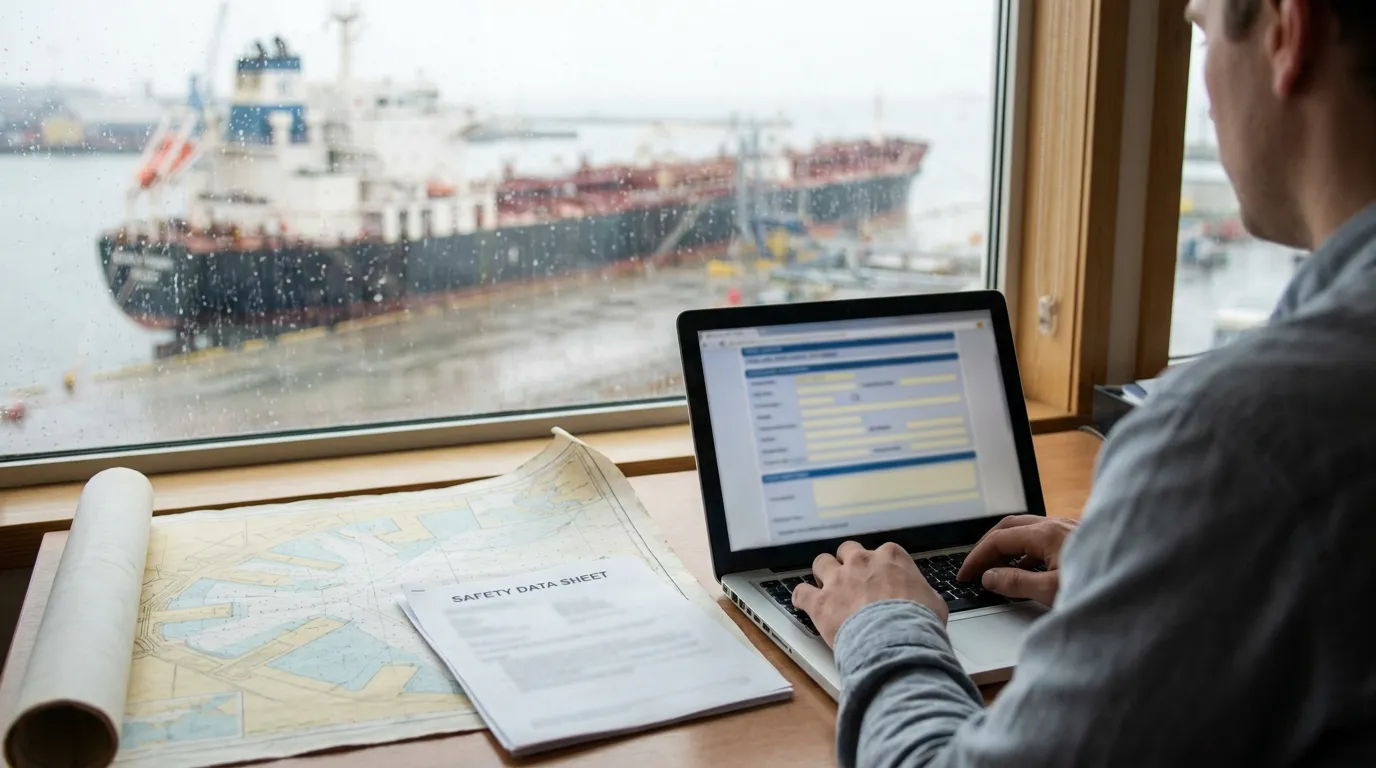
Name the product precisely, including grade or specification where relevant. For chemicals, have the safety data sheet (SDS) ready, because vessel suitability and certification depend on the exact product.
Product Quantity
State the quantity with its unit, such as 20,000 metric tonnes, and mention any tolerance you can accept. Quantity drives vessel size.
Ports of Departure and Arrival
Give both ports, and the specific terminals if you know them. Terminal restrictions on draft, vessel length and berth size can rule vessels in or out.
Desired Departure and Arrival Dates
Give your preferred departure date and, if it matters, your required arrival date. Say how flexible you are: a wider loading window usually means more vessel options.
Additional Requirements
Use the notes field for anything that affects the voyage: heating requirements, previous-cargo restrictions, inspection or sampling needs, or documents you require.
How to Prepare a Tank Storage Booking Request
For tank storage booking, the provider needs to match your product to a compatible tank of the right size, for the right period. ADINA SHIPPING's tank booking form asks for:
- Company and contact details: name, address, email and phone number.
- Product type to store: the exact product, with its SDS for chemicals.
- Required storage volume (m³): storage is sized in cubic metres, so convert from tonnes if needed and allow for any working space.
- Desired storage start and end dates: the period you need the tank for, including any flexibility.
- Special requirements: temperature range, handling needs, atmosphere control, sampling or reporting frequency.
It also helps to say how the product will arrive and leave (by vessel, pipeline, road or rail) and which hub you prefer. ADINA SHIPPING lists tank storage in Singapore, Rotterdam, Houston and Fujairah. For more on choosing a facility, see our guide to tank storage solutions.
Common Mistakes That Delay a Chemical Logistics Booking
Most delays come from a handful of avoidable issues:
- Vague product names: "solvent" or "oil" is not enough to confirm vessel or tank suitability.
- Missing safety data: without an SDS, a chemical cargo cannot be properly assessed.
- Units without context: a quantity with no unit, or tonnes where cubic metres are needed.
- Countries instead of ports: a country name does not tell the provider which terminal restrictions apply.
- Fixed dates with no flexibility stated: the provider cannot tell whether a slightly different window would work.
- Hidden special requirements: heating, purity or inspection needs that only surface after a vessel or tank has been proposed.
Booking Vessel Transportation and Tank Storage Together
Many supply chains need both: a vessel to move the cargo and a tank to receive or hold it. Booking them together, or at least planning them together, helps make sure the tank is ready when the vessel arrives and that the next shipment is lined up before storage ends.
Once the cargo is moving, tracking keeps both sides aligned. ADINA SHIPPING's fleet page shows live AIS positions for listed vessels, and our article on chemical logistics with real-time tracking explains how that visibility supports receiving and storage planning.
Booking Online or Contacting the Team Directly
An online booking request is the quickest way to share structured information. If you prefer to talk your requirements through, you can contact the booking team directly. ADINA SHIPPING's booking page summarises what to have ready:
- For vessel booking: company and contact, vessel type, cargo type and volume, ports and preferred dates.
- For tank booking: company and contact, tank type, product and volume, start and end dates and temperature needs.
Booking Checklist
Before you submit, check that you have:
- A named contact who can answer operational questions
- The exact product name and specification
- The SDS for chemical products
- Quantity with units (tonnes for vessels, cubic metres for storage)
- Loading and discharge ports or terminals
- Preferred dates and how flexible they are
- Temperature, handling, inspection and documentation requirements
Frequently Asked Questions
What information do I need to book a vessel?
You need your company and contact details, the vessel type if known, the product type, the quantity, the departure and arrival ports and your desired dates, plus any special requirements.
What information do I need to book tank storage?
You need your company and contact details, the product to be stored, the required volume in cubic metres, the storage start and end dates and any special requirements such as temperature or handling.
Is a booking request a binding contract?
No. A booking request starts the process. The provider reviews your requirements, proposes suitable options and confirms terms with you before anything is fixed.
Why does the product type matter so much?
The product determines which vessels and tanks are suitable, what certification is required and how the cargo must be handled. Exact product information avoids delays and safety risks.
Can I book vessel transportation and tank storage together?
Yes. Planning both together helps align vessel arrival with tank availability and keeps the whole supply chain on schedule.
Conclusion
A clear, complete request is the fastest route to a confirmed vessel or tank. For vessel booking, that means precise cargo details, ports and dates; for tank storage booking, it means the product, volume in cubic metres, storage period and any special handling needs.
Preparing this information before you submit turns a chemical logistics booking from a long email thread into a short, productive conversation, and gets your cargo moving sooner.
Ready to move or store your next cargo? Submit a booking request or contact our team.